Whether a softener is worth it comes down to one number: your hardness in grains per gallon. Here is what it is where you live, and when a softener is the wrong answer.
Most of the water softener advice online was written for somewhere else. On the Front Range the answer changes town by town: Thornton publishes about 11.7 grains per gallon, Boulder 2.4. That is nearly a five-fold difference inside one metro area.
So before anything else: find your hardness number.
Hardness, in the only unit that matters
Hardness is dissolved calcium and magnesium. It gets published two ways, milligrams per litre (mg/L) and grains per gallon (gpg). One grain per gallon is 17.1 mg/L, so if your utility reports 200 mg/L, that is about 12 gpg.
Here is the scale the water industry uses:
| Hardness | Grains per gallon |
|---|---|
| Soft | Under 1 |
| Slightly hard | 1 to 3.5 |
| Moderately hard | 3.5 to 7 |
| Hard | 7 to 10.5 |
| Very hard | Over 10.5 |
What it is where you live
| City | Hardness (grains per gallon) | How hard | Disinfectant | Source |
|---|---|---|---|---|
| Thornton | 11.7 average; 8.2 in winter, up to 14.6 in summer | Very hard | Chloramine | City of Thornton |
| Pueblo | 10.5 average | Very hard | Not published | Pueblo Water |
| Castle Rock | 6.6 to 10.8 | Hard | Chloramine | Castle Rock Water |
| Aurora | about 8 (136 ppm average) | Hard | Chloramine | Aurora Water |
| Westminster | 7 to 8 (2021 data) | Hard | Chloramine | City of Westminster |
| Denver | not published as a number | Moderately hard | Chloramine | Denver Water |
| Arvada | about 5 (84 mg/L average) | Moderately hard | Free chlorine | City of Arvada |
| Colorado Springs | not published | Not published | Not published | Colorado Springs Utilities |
| Boulder | 2.4 average | Soft | Free chlorine | City of Boulder |
| Longmont | 1 to 2 | Soft | Not published | City of Longmont |
| Fort Collins | not published as a number; the city calls it naturally soft | Soft | Free chlorine | Fort Collins Utilities |
| Greeley | not published | Not published | Free chlorine | City of Greeley |
Two things jump out of that table.
Thornton has the hardest municipal water we found on the Front Range. The city publishes about 200 mg/L (11.7 grains per gallon) on average, up to 250 mg/L in summer, and its 2026 report shows an average near 230 mg/L for 2025. If you live there and you have ever scrubbed a shower door, the water is not your imagination.
Boulder, Longmont and Fort Collins are soft. Boulder publishes 2.4 gpg. Longmont publishes 1 to 2 and its own report says a water softener is not recommended. Fort Collins describes its water as naturally soft because it comes from snowmelt. There is essentially nothing for a softener to remove.
When a softener is worth it
Above roughly 7 gpg, the things a softener fixes are the things people actually complain about:
- Scale on fixtures, shower heads and glass. Crust on the shower head is hardness, drying on the surface.
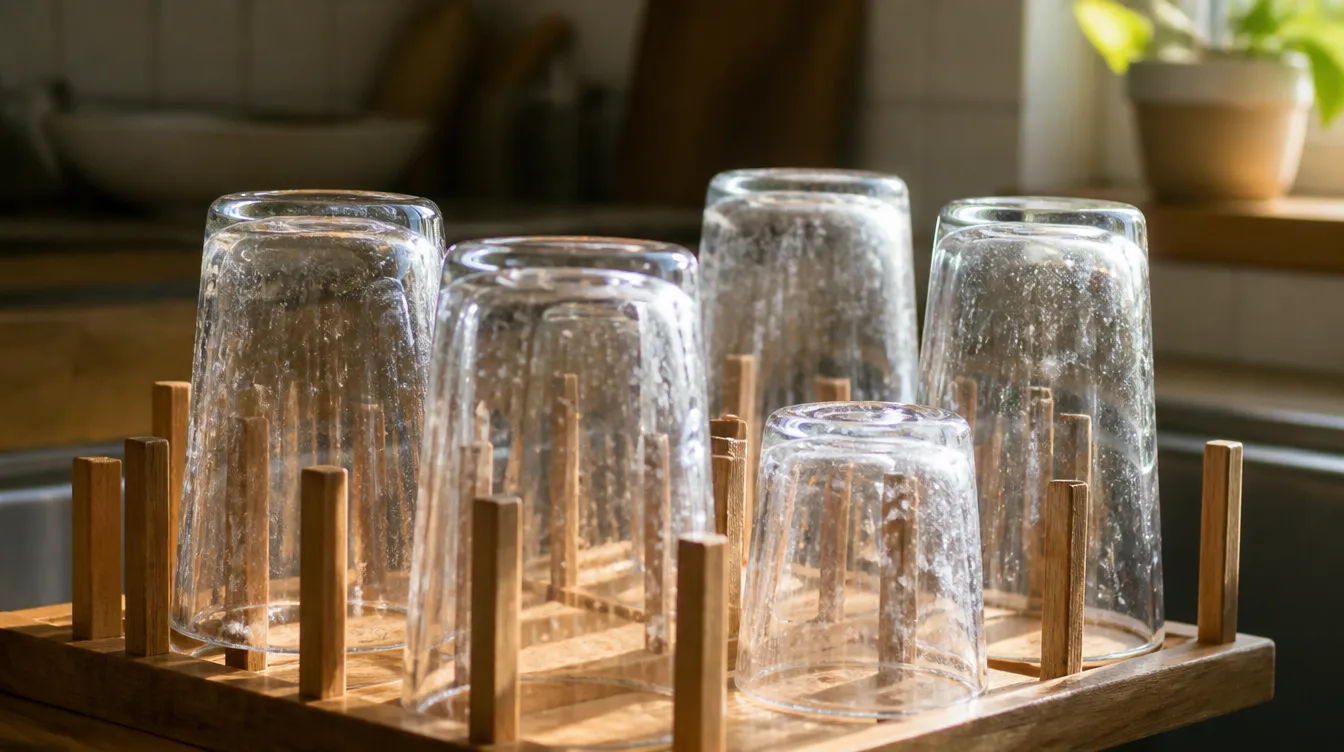
- Spots and film on dishes. Especially glassware out of the dishwasher.
- More soap and detergent than you should need. Controlled testing has found up to 50% less laundry detergent and up to 70% less dishwasher detergent needed on softened water.
- Scale inside water heaters and appliances. This matters most for tankless heaters, which are the least forgiving of hard water.
- How the water feels. Soap rinses cleaner, and most people notice it in the shower first.
When it is the wrong answer
Being straight about this is most of our job:
- Your water is already soft. See above.
- Your complaint is taste or smell. Chlorine and chloramine are not hardness. A softener will not touch them, and a whole-home catalytic carbon filter will.
- You only care about drinking water. If the goal is better water in the glass and in the coffee, reverse osmosis at the kitchen sink costs a fraction of a whole-home system.
- You are on a well and nobody has tested it. Hardness might be the least interesting thing in that water. Get a certified lab test first, then build the system around the result.
What we don’t claim
There is a lot of marketing in this industry that outruns the evidence, so here is where we stop:
- Health. The World Health Organization finds no convincing evidence that hard water is harmful to drink. We do not sell softeners as a health product.
- Eczema. A randomized trial published in 2011 found that installing a softener did not improve established eczema in children. Some research links hard water to eczema risk in infants, but that is an association, not a treatment claim.
- Energy savings percentages. Scale does make water heaters less efficient, and the effect is real, but the specific percentages you see quoted come from modelled worst cases. We would rather show you a hardness number that changed.
The two-minute version
- Look up your hardness in your utility’s annual report, or ask us to measure it at your tap.
- Under 3 gpg: skip the softener. Look at carbon or reverse osmosis if taste is the issue.
- 3.5 to 7 gpg: a softener works, but it is a preference call. Scale will be mild.
- Over 7 gpg: a softener is the fix, and you will see the difference on fixtures and glassware.
- On a well: test first, in a certified lab, then decide.
Sources
- Hardness and disinfectant by city, each with the utility's own source — published figures, checked September 2026
- Water Quality Research Foundation / Battelle study on detergent use with softened water — up to 50% less laundry and 70% less dishwasher detergent
- Softened Water Eczema Trial (SWET), 2011, n=336 — no benefit for treating established eczema
- World Health Organization, hardness in drinking water — no convincing evidence of adverse health effects
Common questions
What hardness level actually needs a softener?
Above about 7 grains per gallon, most people notice scale and spotting, and a softener makes a visible difference. Between 3.5 and 7 gpg it is a preference. Under 3 gpg there is very little to remove, so a softener would not change much.
Can I just use a filter instead of a softener?
No. Carbon filters remove chlorine, chloramine, taste and smell. They do not remove calcium and magnesium, so they do nothing about scale. Only a softener (ion exchange) changes the hardness number.
Does a softener make water taste salty?
It should not. Ion exchange adds sodium in proportion to the hardness it removes, roughly 0.46 mg/L of sodium for every 1 mg/L of hardness. On very hard water that is enough to be worth planning around, which is why we recommend an unsoftened or reverse osmosis tap for drinking water.
How do I find my hardness without buying anything?
Your water utility publishes it in its annual water quality report, usually in mg/L. Divide by 17.1 to get grains per gallon. We also measure it at your tap with a titration test before we quote anything.