Under-Sink Reverse Osmosis System Installation
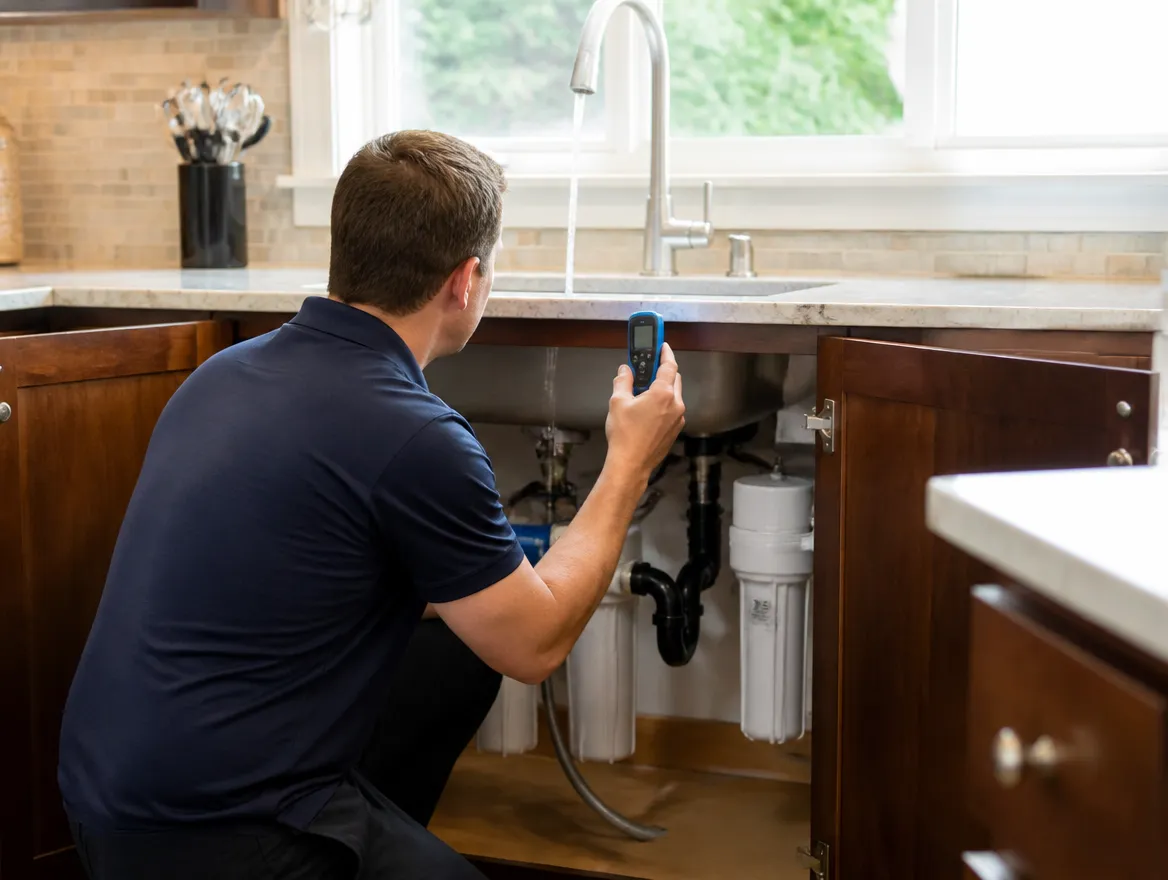
We test your water at the tap first. If a simpler filter will do, we'll tell you. If you need reverse osmosis, we install it under your kitchen sink with its own faucet.
There's no charge for the test, and no obligation to buy. It takes about 30 minutes at your kitchen sink, with nothing to prepare.
What Homeowners Say
Read our reviews on GoogleVery exceptional work!! Had someone come out to do a water test and install a reverse osmosis system under my sink. Super easy process and I am very happy with how it turned it out.… Haven't had any problems, highly recommend!
Excellent experience working with Nico at ClearGen Water. He was courteous, professional, and knowledgeable about our area's water, and our in-home tap water test was thorough and well-explained. This personalized review was great as Nico walked us through the results and how our family could best optimize our water quality in an honest, direct, and transparent way.… I'd highly recommend him to others as knowing what is actually in our tap water is so important, and you don't feel pressured to buy anything throughout the whole process. In fact, Nico went out of his way to learn about our water usage, what's important to our household in a water filtration system, and answered all our questions along the way. We could not recommend him more highly to others!
Very professional and diligent! Would highly recommend
Do You Need a Reverse Osmosis Water Filter?
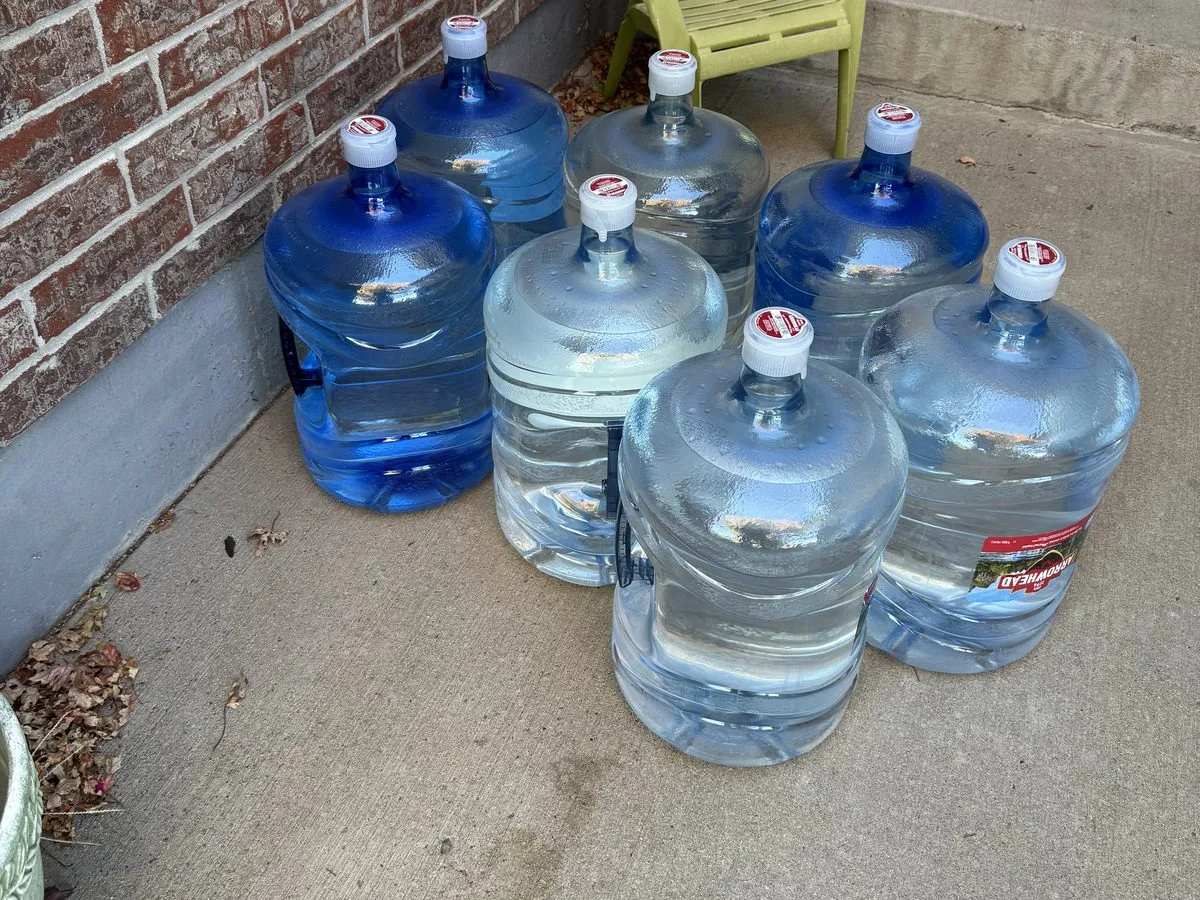
You probably do if your household buys jugs, refills pitchers all day, or doesn't trust the tap for drinking and cooking. A reverse osmosis water filter under the kitchen sink replaces that with its own faucet.
You probably don't if your only complaint is the chlorine taste: a simple carbon filter does that for less, and we'll tell you so.
- Jugs or cases of bottled water every week
- Coffee, tea and ice that taste off
- Questions about lead or PFAS in your tap
- A pitcher filter you refill all day
What Does a Reverse Osmosis System Remove?
Most dissolved solids: lead, PFAS, nitrate, arsenic, uranium and sodium, along with the mineral taste that shows up in coffee and ice. A carbon prefilter takes out chlorine first, and a polishing filter after the tank handles taste on the way to the faucet.
Whether PFAS is in your tap depends on your district. Parker Water reported PFOA as high as 4.8 parts per trillion in a 2025 sample, against an EPA limit of 4; its average was 1.2, and compliance is judged on running annual averages. Denver Water detected no PFAS at any of its plants. A certified lab test tells you what is in yours.
It treats the one faucet it feeds. Your shower, dishwasher and water heater see what they saw before.
Under Sink Water Filter or Reverse Osmosis: Which Do You Need?
It depends on what your test shows. A carbon under sink water filter takes out the chlorine taste and smell and costs less. Reverse osmosis adds a membrane that removes most dissolved solids, which is what lead, PFAS and nitrate call for.
If your water only tastes of chlorine, carbon is enough. If you want far fewer dissolved solids, or a lab test shows something carbon can't remove, it's reverse osmosis.
What Are the Benefits of a Reverse Osmosis Water Filtration System?
Clean drinking and cooking water from its own faucet at the kitchen sink, so the jugs and pitchers can go.
- No more hauling or storing bottled water
- Coffee, tea and ice without the mineral or chlorine taste
- Far fewer dissolved solids, measured at the RO faucet
- Cooking water from the same faucet
How Is a Reverse Osmosis System for Home Installed?
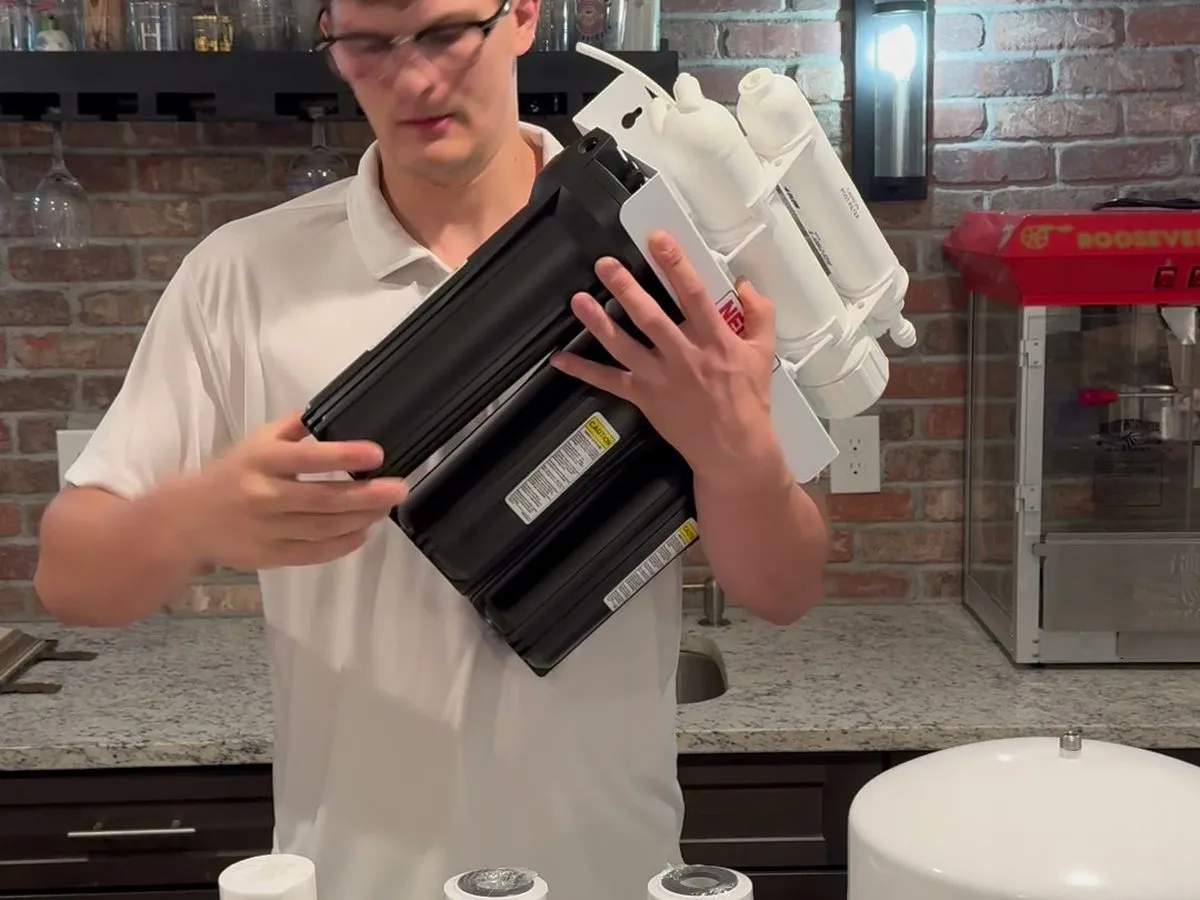
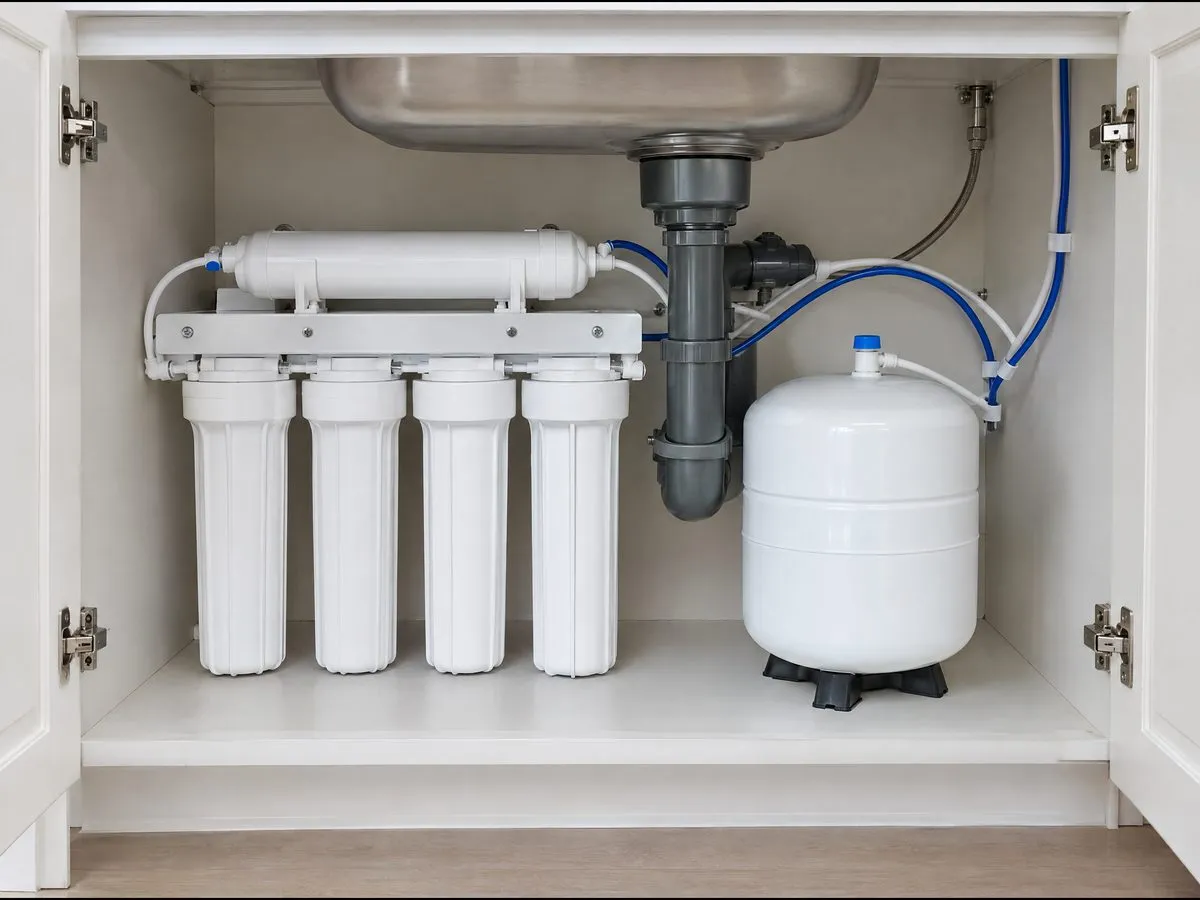
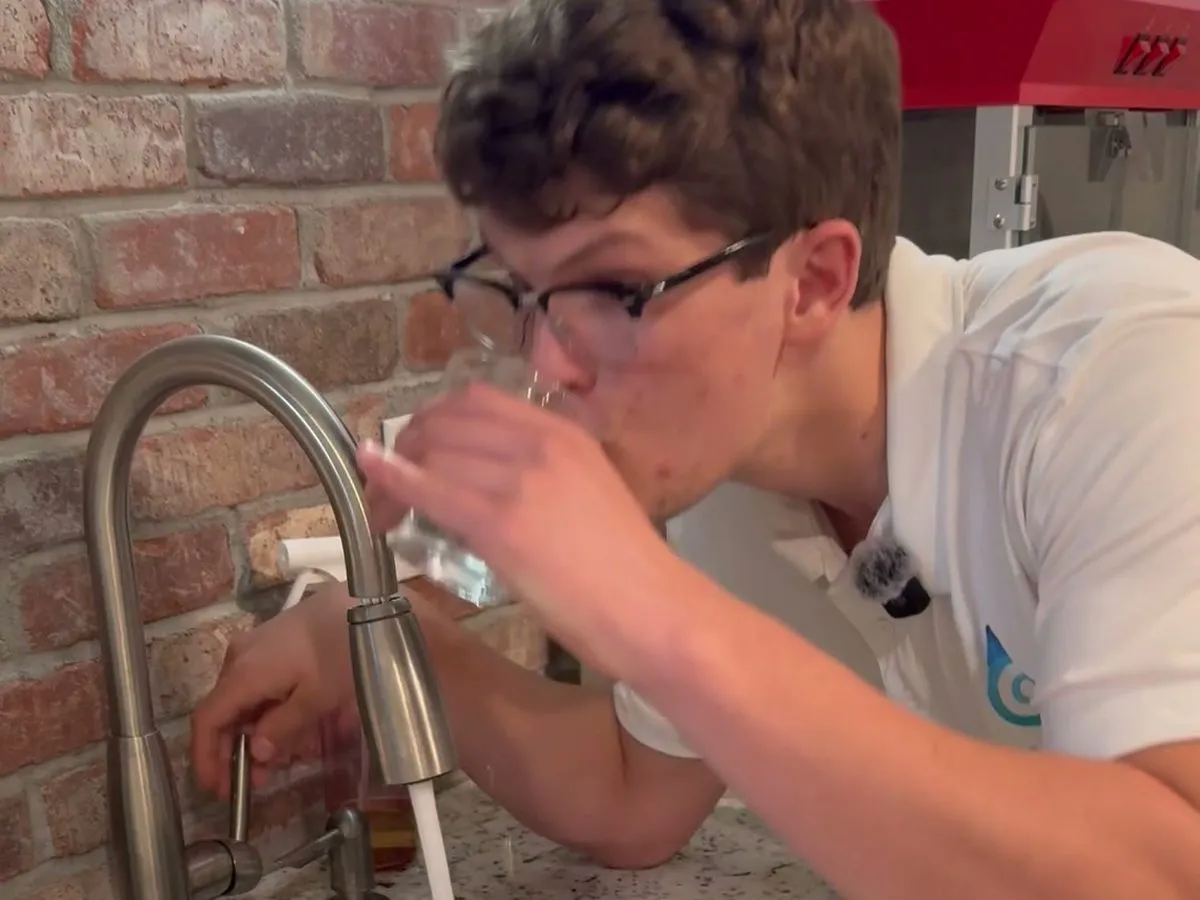
Under your kitchen sink, usually in a few hours. The system mounts in the cabinet, gets its own faucet on the sink or countertop, and a drain line for the water the membrane sends away.
A licensed plumber does the install. Before we install, we write down the number it has to hit: 85% or more reduction in dissolved solids at the RO faucet compared with your tap. Before we leave, we measure both. If it misses, you get your money back.
What Does Reverse Osmosis Filter Replacement Take?
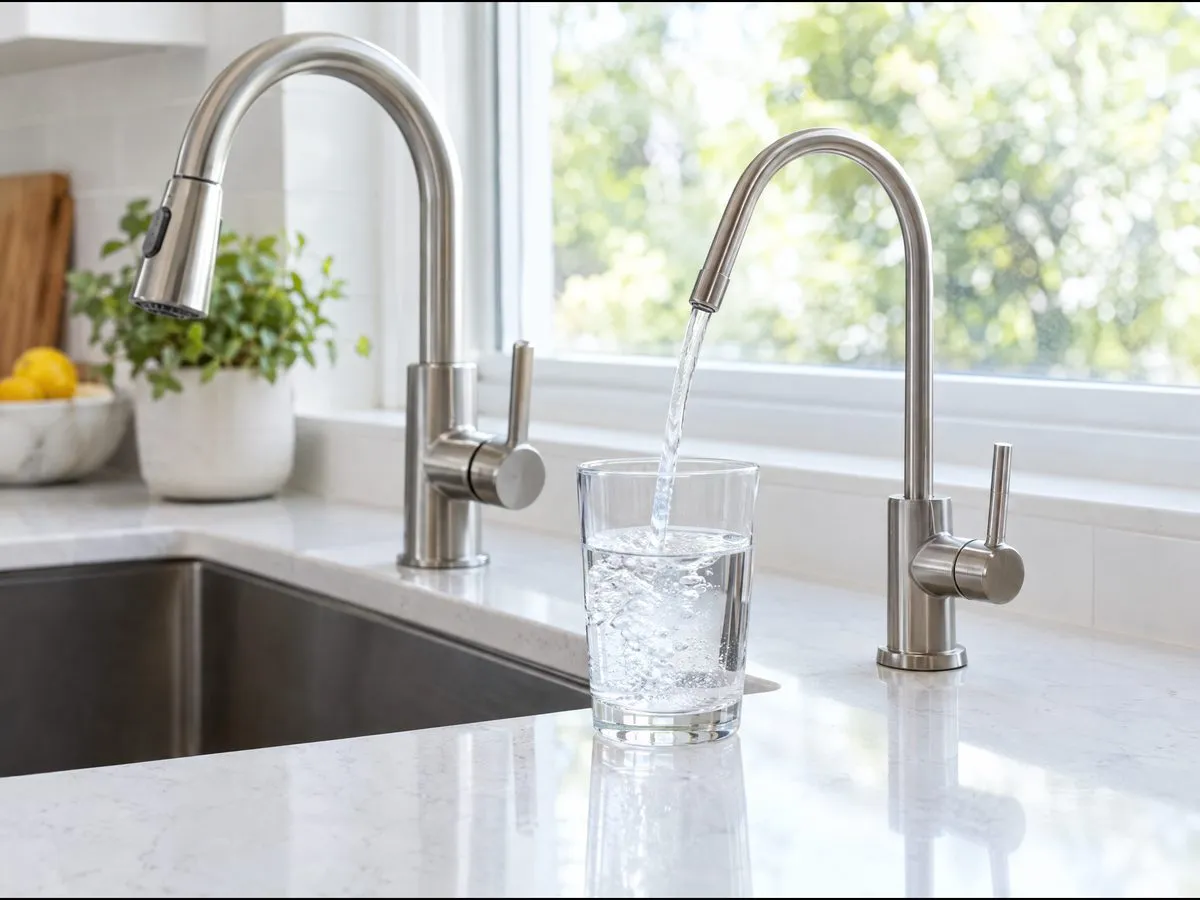
Changing the prefilters about once a year. The sediment and carbon prefilters are the routine change, the polishing filter goes with them, and the membrane lasts several years longer.
Your water and how much you draw set the exact schedule, which we give you in writing with the cartridge cost before you buy. We fit systems that take standard cartridges, not proprietary ones. A TDS meter shows you when: compare your tap with the RO faucet, and when the gap narrows, something is due.
Why Homeowners Choose ClearGen Water
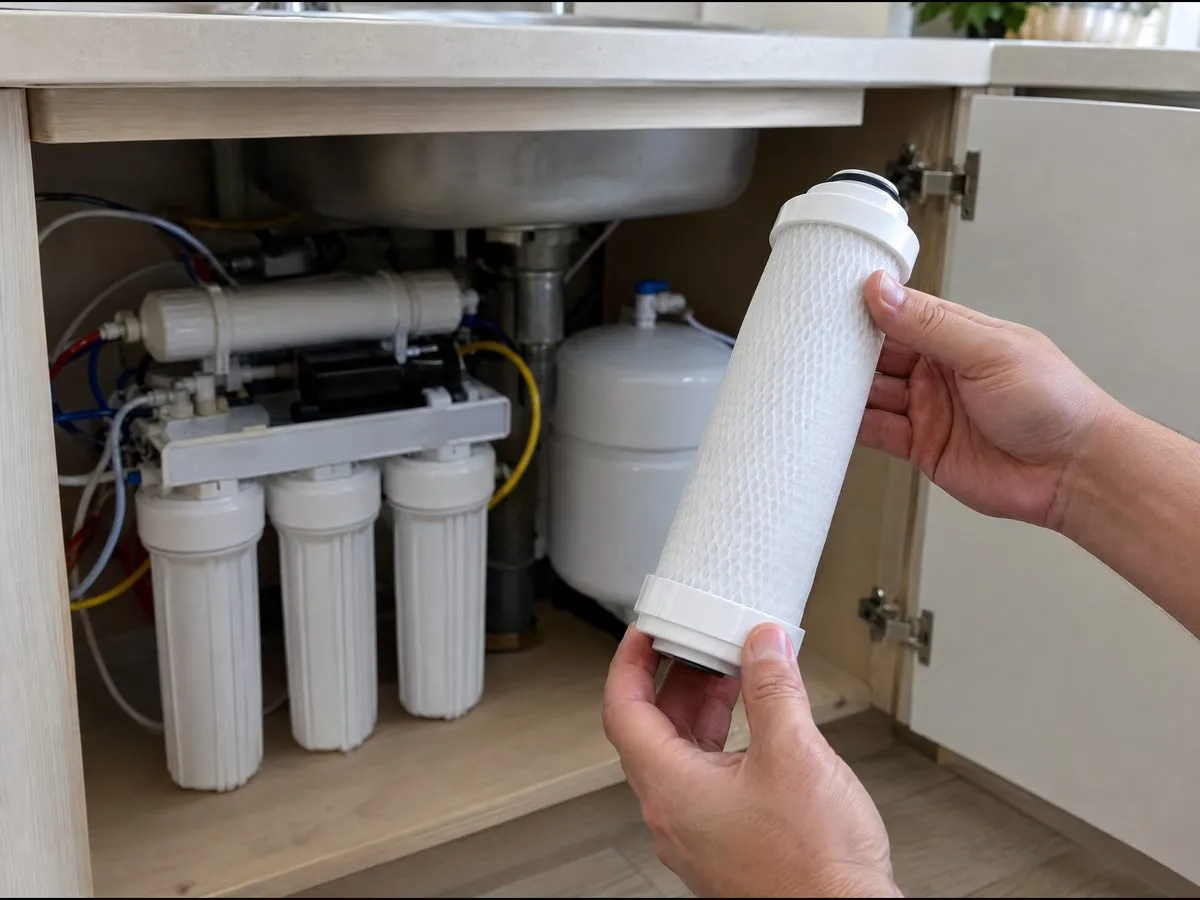
ClearGen is a local water company, and Nico, who runs it, does your water test himself. You see every reading, and you keep them in writing whether or not you buy anything.
- We tell you when you don't need a reverse osmosis system, and show you the number that says so
- The target the system has to hit goes in writing before we install, and we retest to prove it
- Equipment that takes standard parts, so any plumber can service it
- A licensed plumber does the install, with the permit pulled where your city requires one
How it works
How Our Reverse Osmosis Install Works
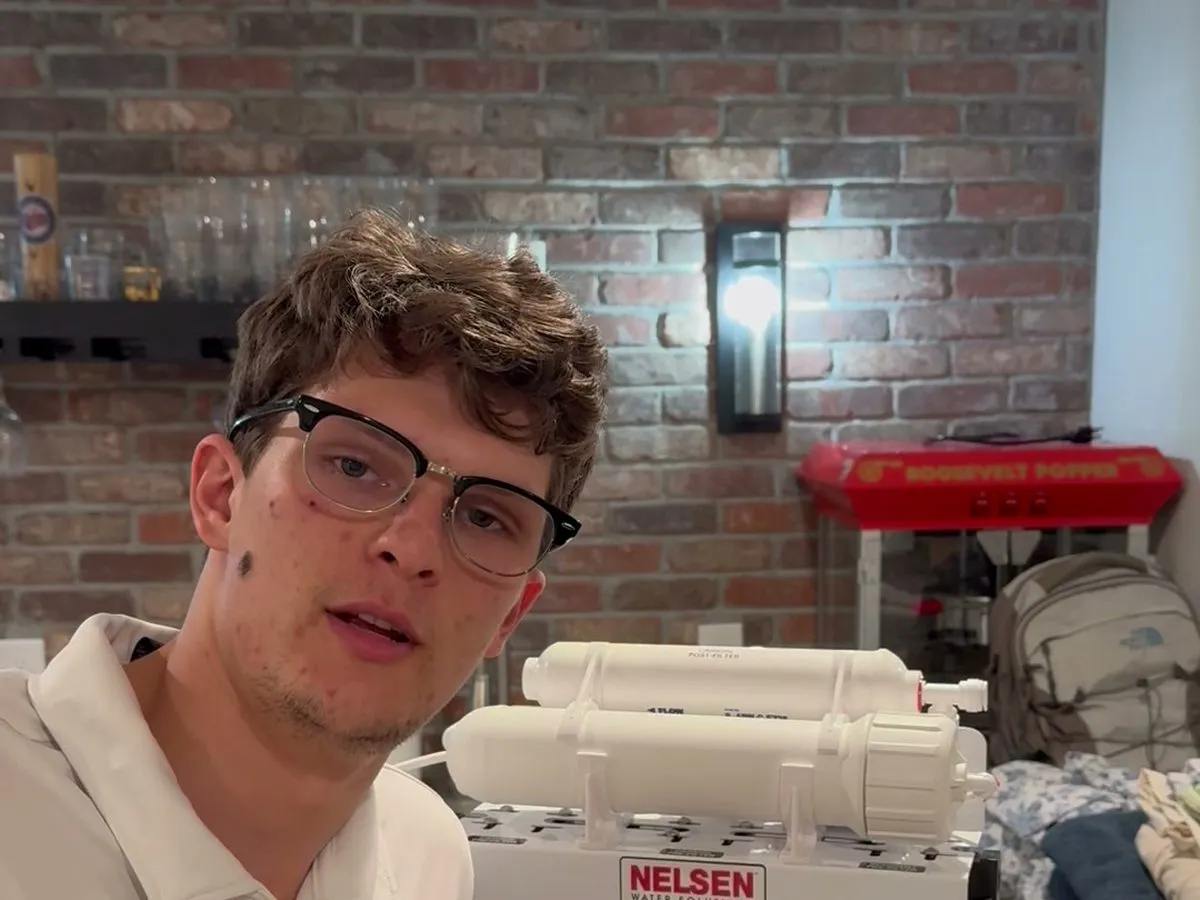
The test takes about thirty minutes. Nothing to prepare except access to your kitchen sink and the cabinet under it.
- 1
Test
We measure dissolved solids and chlorine at your tap and ask what you've noticed.
- 2
Compare
We put your readings next to what your utility publishes and go through them with you.
- 3
Recommend and Install
RO only if the numbers call for it. Installed under your sink with its own faucet, then retested at that faucet.
Where it goes: under the kitchen sink, with a dedicated faucet and a drain line. It treats that one faucet, not the whole house.
Questions
Reverse Osmosis FAQ
How much does it cost to install a reverse osmosis system?
It depends on the system (tank or tankless), where the faucet and drain connection can go, and the space under your sink. We quote after the test, and we give you the cartridge costs up front so the running cost isn't a surprise.
How long does it take to install a reverse osmosis system?
Usually a few hours. It mounts under the kitchen sink with its own faucet and a drain line. It takes longer if the faucet needs a new hole in the countertop or a line runs to the fridge, and we tell you which after we've seen the cabinet.
What is the downside of reverse osmosis?
It sends some water to the drain while it makes clean water, it refills its tank slowly, and it treats only the faucet it feeds. It also removes minerals along with the contaminants, which some people notice in the taste.
What can't reverse osmosis remove?
Dissolved gases and some small chemicals, such as certain solvents, pass through a membrane, which is why RO systems include carbon stages. RO also isn't a disinfection system for untreated water: on a well with bacteria, that is a job for UV. And it only treats the water at its own faucet.
How often should I change my under-sink reverse osmosis filters?
The sediment and carbon prefilters are the routine change, often about once a year, and the membrane lasts several years longer. Your water and how much you draw set the exact schedule, which we give you in writing. A TDS meter shows you when: compare your tap with the RO faucet, and when the gap narrows, something is due.
Is it safe to drink reverse osmosis water every day?
Millions of people do: much of the bottled water sold in the U.S. is purified by reverse osmosis. RO water simply has fewer dissolved minerals. If you prefer some minerals in the taste, a remineralizing cartridge adds calcium and magnesium back.
Does reverse osmosis waste water?
Some. An RO membrane sends a stream of concentrate to the drain as it makes clean water. Modern systems are far more efficient than older ones, and it only runs when the tank is refilling.
Why does a reverse osmosis system have a drain line?
Because the membrane works by flushing away what it removes. Water is pushed across the membrane, clean water passes through, and the rejected concentrate goes down the drain instead of building up. It only flows while the tank is refilling.
Will I be pressured to buy?
No. No color-changing drops, no demonstrations and no two-hour pitch at the kitchen table. You get your readings in writing, what they mean, and a straight answer, including that you don't need anything. You keep the scorecard either way.
More questions (2)
Can you install your own reverse osmosis system?
Plenty of handy homeowners do: it is mostly push-fit tubing, a drain connection and a faucet. The parts people get wrong are the drain connection and drilling a stone countertop for the faucet. Installing one for someone else in Colorado is plumbing work, so a licensed plumber does ours, and we test before and after so you can see what it does.
How far can a reverse osmosis system be from the faucet?
It doesn't have to sit right under the sink. It can go in a basement below the kitchen, with tubing run up to the faucet, and a line can also feed the fridge or ice maker. Longer runs mean a little less flow at the faucet. We look at the space during your water test and tell you where it fits.
Reverse Osmosis Installation Service Areas
ClearGen Water installs reverse osmosis systems across the Denver metro and the surrounding communities. We're based in Parker, so we're never far away.
- Reverse Osmosis InstallationParker, CO
- Reverse Osmosis InstallationCastle Rock, CO
- Reverse Osmosis InstallationHighlands Ranch, CO
- Reverse Osmosis InstallationCentennial, CO
- Reverse Osmosis InstallationAurora, CO
- Reverse Osmosis InstallationDenver, CO
- Reverse Osmosis InstallationLittleton, CO
- Reverse Osmosis InstallationMonument, CO
- Reverse Osmosis InstallationThornton, CO
- Reverse Osmosis InstallationWestminster, CO
- Reverse Osmosis InstallationBroomfield, CO
- Reverse Osmosis InstallationArvada, CO
Neighborhoods we serve
- Parker
- The Pinery, Stonegate, Pradera, Idyllwilde, Canterberry Crossing, Stroh Ranch, Bradbury Ranch, Anthology
- Castle Rock
- The Meadows, Crystal Valley Ranch, Terrain, Founders Village, Plum Creek, Red Hawk
- Highlands Ranch
- BackCountry, Westridge, Northridge, Eastridge, Southridge
- Centennial
- Willow Creek, Piney Creek, Cherry Knolls, Southglenn
- Aurora
- Saddle Rock, Southshore, Tallyn's Reach, Murphy Creek, Blackstone, Heritage Eagle Bend
- Denver
- Central Park, Green Valley Ranch, Lowry, Washington Park, Cherry Creek, Hilltop
- Littleton
- Ken Caryl, Roxborough Park, Columbine
- Monument
- Jackson Creek, Promontory Pointe, Sanctuary Pointe
- Broomfield
- Anthem, Interlocken
Book Your Water Test
If you don't need a reverse osmosis system, we'll tell you.
We measure at your tap before we quote anything. You keep the readings either way.
There's no charge for the test, and no obligation to buy.