(720) 619-8802
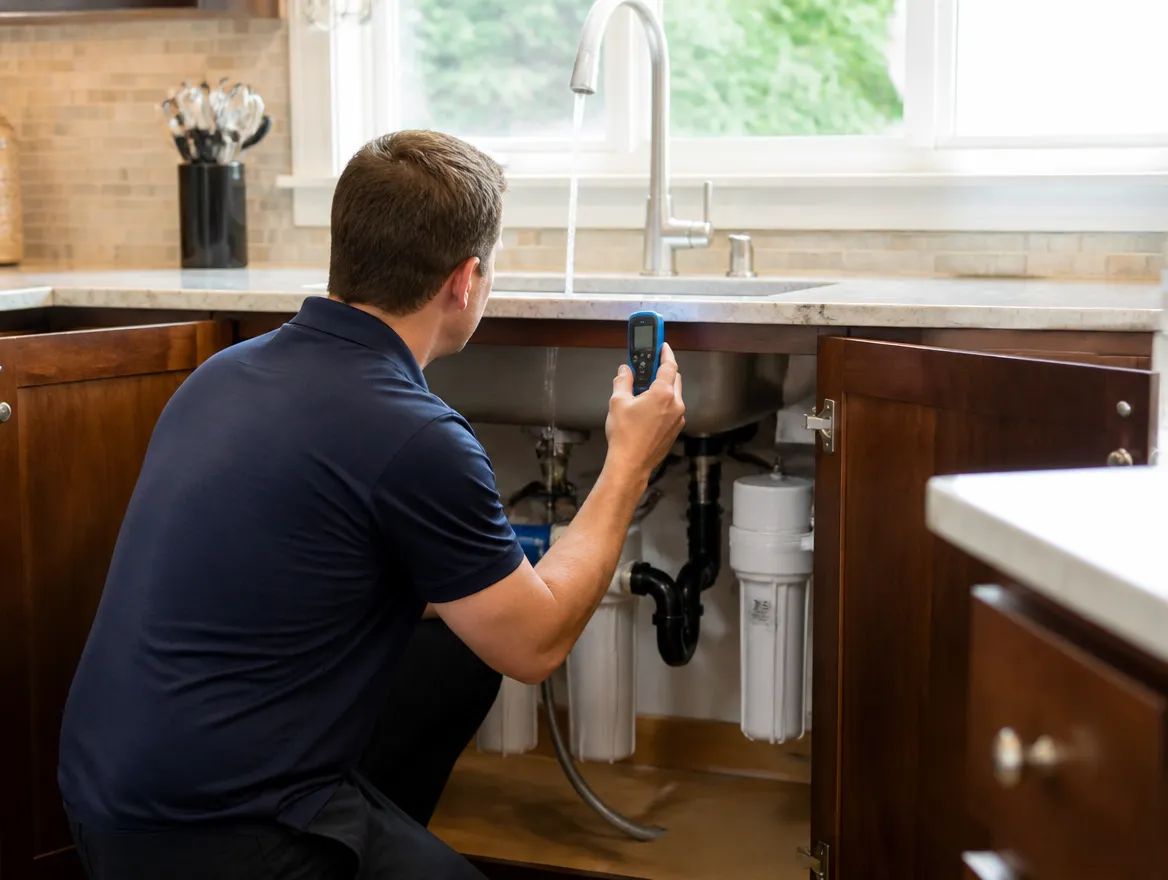
A technician testing water at a kitchen sink with a handheld meter

Our process

Test, explain, install, retest

Five steps from the first knock to the written proof it worked. No demonstrations, no pressure, and no price that depends on how the conversation goes.

Book a water test

Step one takes about thirty minutes.

By submitting this you agree to our terms and privacy policy, and consent to a call or text about your request. Message and data rates may apply.

Licensed plumber installs Written results

From consultation to completion

A simple, no-pressure water treatment experience

Water treatment has a reputation problem, and it comes almost entirely from how the visit is run. Here is exactly how ours goes.

01

We test your water

At your kitchen tap, with instruments that have a name: a titration kit for hardness, a DPD photometer for total chlorine, a calibrated meter for TDS. Anything health-related — lead, PFAS, bacteria, nitrate — goes to a certified laboratory, because it cannot be measured honestly at a sink.

You get the readings in writing, with your address, the date and the method used.
02

We tell you what the numbers mean

Your readings against what your utility publishes, and what actually changes if you fix it. We show the sizing arithmetic — grains per day against the system's rated capacity and flow rate — so you can see why we recommend the size we recommend.

If the test says you don't need anything, that is what we tell you, and you keep the report.

03

We write down the target

Before anything is installed, the number the system has to hit goes on paper: under 1 grain per gallon for a softener, under 0.1 ppm total chlorine for carbon, 85% or better TDS reduction for reverse osmosis. Well targets are set by your lab result.

You get the full written guarantee terms before you agree to anything.

04

A licensed plumber installs it

Correct order matters: sediment, then catalytic carbon, then the softener, then reverse osmosis at the kitchen. Carbon goes before the softener because chloramine shortens resin life. On a well, ultraviolet goes last, because UV needs clear water to work.

Open-platform metered valves, so any competent plumber can service them in year eight.

05

We retest the same taps

Same taps, same instruments, same method, so the before and after are genuinely comparable. You get the second report alongside the first.

If the after number misses the target, you get your money back.

What we bring

Instruments, not demonstrations

Precipitation demos, soap-shaking comparisons and colour-change drops are theatre. They are designed to produce a reaction, not a number. Here is what we actually use.

  • Titration for hardness — reported in grains per gallon, the same unit your utility uses.
  • DPD photometer for total chlorine — free chlorine and chloramine read differently, and it matters which you have.
  • Calibrated TDS meter — the baseline we measure reverse osmosis against.
  • A certified laboratory — for lead, PFAS, bacteria, nitrate, arsenic and uranium. The report comes back in the lab's name, not ours.
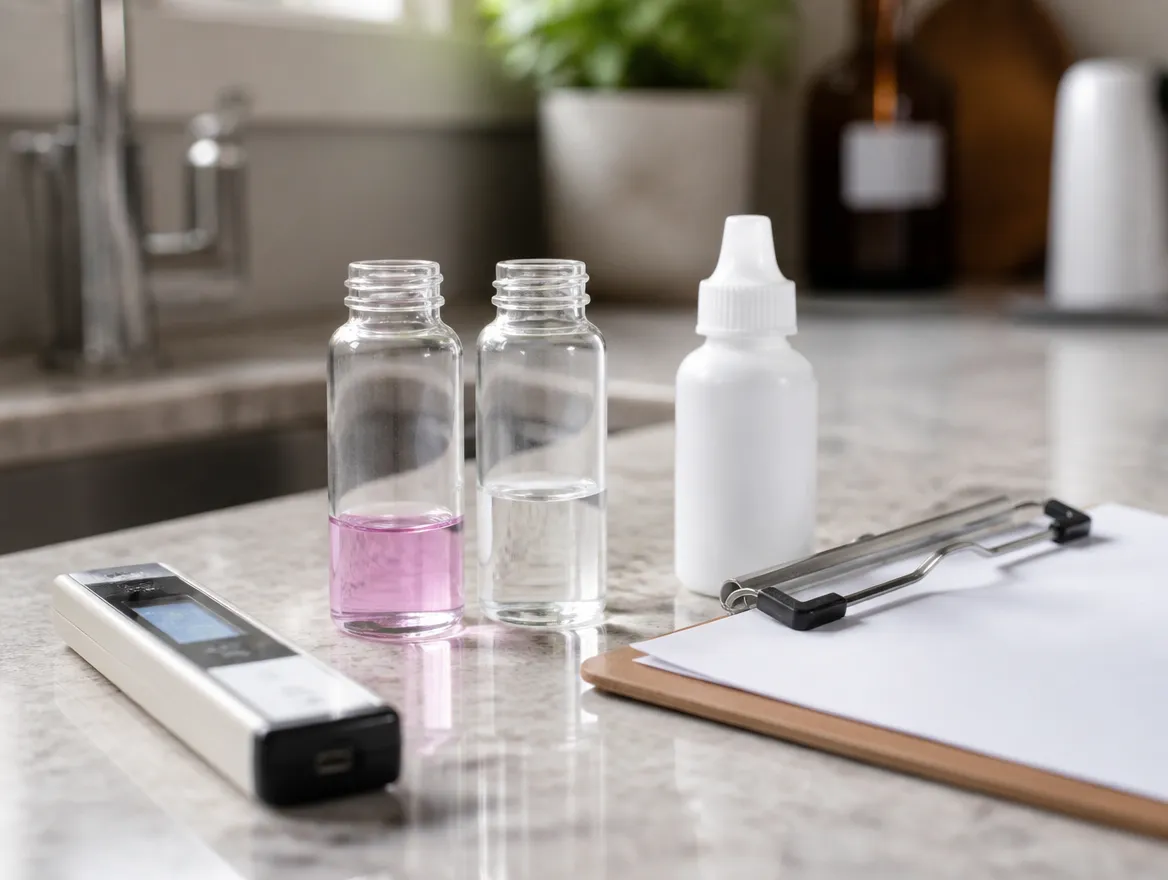
Water sample vials, a titration dropper and a handheld meter on a kitchen counter

The guarantee

What we have to prove afterwards

This is the part that separates a performance guarantee from an equipment warranty. A warranty promises the tank won't fail. This promises your water changed.

SystemWhat we measureThe number we have to hit
Water softenerHardness by titration at a softened cold tapUnder 1 grain per gallon
Whole-home carbonTotal chlorine at the kitchen tap and a showerUnder 0.1 ppm
Reverse osmosisTDS at your tap vs. the RO faucet85% or more reduction
Well waterCertified lab panel, before and afterTargets set by the lab result

Miss the target and you get your money back. You get the written terms before you agree to anything.

Frequently asked·The process

Questions about how this works

Is the water test a sales pitch?

No color-changing drops, no demos and no two-hour pitch. We use calibrated meters, your utility's own water report and a certified lab for health contaminants and wells. You get a written report with your address, the date and the method.

What if the numbers don't change?

Before we install, we write down the target the system has to hit, on paper, with your address and the method. After the install we test the same taps the same way. If the after number misses the target, you get your money back. We will give you the full written terms before you agree to anything.

Do I have to buy something after the test?

No. You get the report either way. If your water is already fine, we say so and we don't sell you a system.

Why does carbon go before the softener?

Chlorine and chloramine are hard on softener resin. Putting catalytic carbon first protects the resin and gives every tap chlorine-free water.

Can I use my water district's report instead of testing?

It is a good starting point and we always read it. But it reports the system, not your house. Hardness varies by treatment plant and season, and lead comes from your own service line and plumbing, which no district report can measure for you.

Get in touch

Start at step one

We serve 18 towns across the Front Range. Tell us where you are and what you've noticed, and we'll confirm a time.

Book a water test

We'll text you to confirm a time.

By submitting this you agree to our terms and privacy policy, and consent to a call or text about your request. Message and data rates may apply.

Licensed plumber installs Written results
CallTest my water