Denver Water, Aurora, Thornton, Westminster and Castle Rock all disinfect with chloramine. It does not gas off in a pitcher, and ordinary carbon barely touches it. Here is what does.
If the water in your shower smells like a swimming pool, you are not imagining it and your utility is not doing anything wrong. Most of the Denver metro disinfects with chloramine, and chloramine is designed to stay in the water.
Which Front Range cities use it
From the utilities’ own reports: Denver Water, Aurora, Thornton, Westminster and Castle Rock all use chloramine. Thornton’s running average sits around 2.6 to 2.9 ppm, against a federal maximum of 4.
Boulder, Arvada and Fort Collins use free chlorine instead. Arvada notes the chlorine smell gets stronger in winter, when water sits in the pipes longer because everyone is using less.
Why the pitcher trick doesn’t work
Free chlorine is volatile. Leave a jug on the counter or boil it, and much of it leaves. Chloramine is chlorine bonded with ammonia specifically so it will not do that, because a stable disinfectant protects water all the way to the last house on the line.
That stability is why:
- Standing water in the fridge still smells
- Boiling does not fix the taste
- A cheap pitcher filter or a basic carbon block underperforms on it
- Fish tanks need a dechlorinator that handles chloramine, not just chlorine
The shower is the worst of it
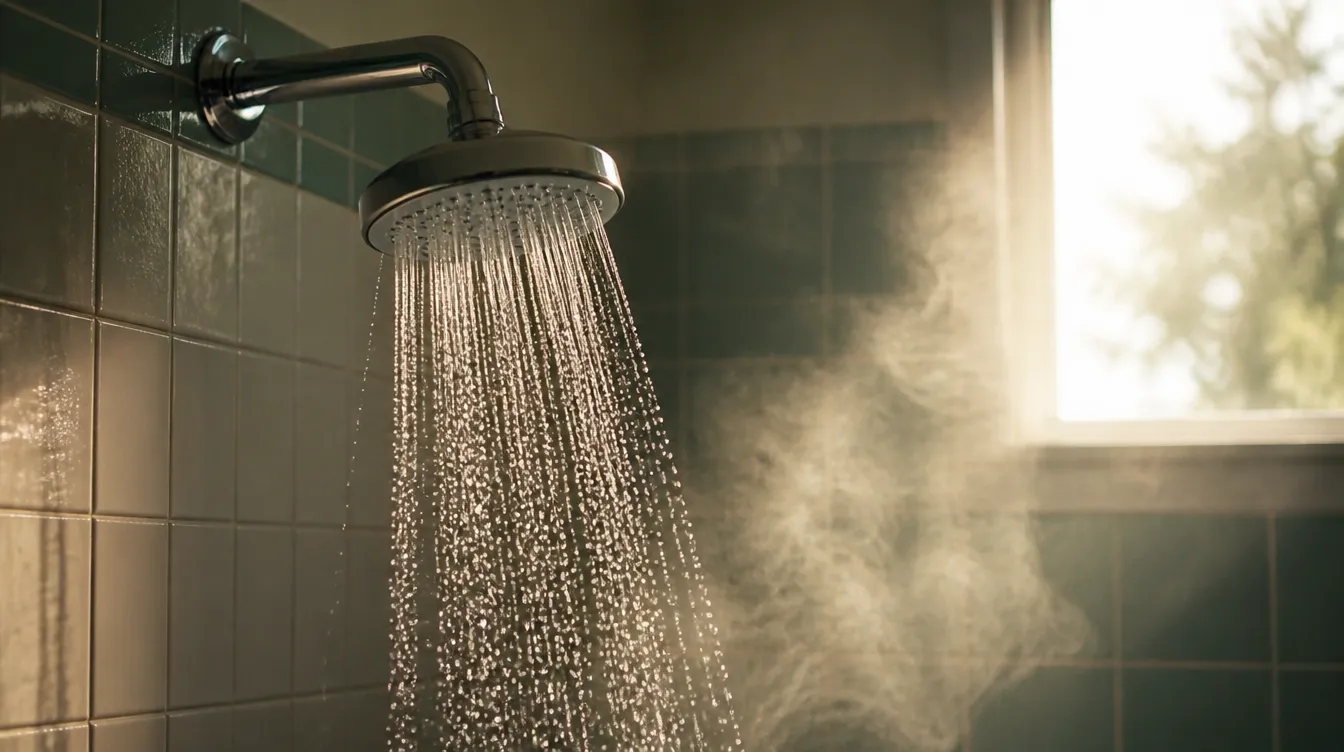
Hot water plus steam releases the smell into the air, which is why people notice it in the shower far more than in a glass. That has a practical consequence: if the shower is the complaint, an under-sink filter cannot fix it. You need the water treated where it enters the house.
What actually removes it
Catalytic carbon, given enough contact time. Catalytic carbon is activated carbon that has been processed to be far more reactive, and it breaks chloramine down rather than simply adsorbing it. Two things decide whether it works:
- The right media. Standard activated carbon handles free chlorine well, but needs much longer contact with chloramine.
- Enough of it. Contact time is a function of tank size against your flow rate. This is where most disappointing installs go wrong: the tank is too small for the house, so water moves through too fast.
We size the tank to your bathrooms and flow, run it as an upflow tank with no drain line and no electricity, and put it before any softener, because chloramine shortens the life of softener resin.
Seasonal taste is a separate thing
Chloramine is a constant. Earthy, musty, “lake” tastes are seasonal and come from algae compounds in source reservoirs. Two Front Range examples, both from the cities themselves:
- Thornton explains its summer and fall earthy or musty smell as algae growth in its reservoirs, caused by extra nutrients in the water, and recommends carbon filtration, including an under-sink system. Its newer plant uses ozone and biofiltration to remove most taste and odor compounds.
- Greeley posted a notice on July 27, 2026 about a temporary taste and odor event from algal compounds in its Boyd Lake source.
Carbon handles these compounds too. The difference is that they come and go with the season, while the disinfectant is there every day.
What this costs
| Fix | What it treats | From |
|---|---|---|
| Under-sink carbon filter | One tap | $695 installed |
| Reverse osmosis at the kitchen | One tap, plus most dissolved solids | $1,395 installed |
| Whole-home catalytic carbon | Every tap and shower | $2,295 installed |
If you are in a soft-water city like Boulder, Longmont or Fort Collins, this is the whole conversation. There is no softener to add, because there is no hardness to remove.
Sources
- Hardness and disinfectant by city, with each utility's source — which Front Range utilities use chloramine
- City of Thornton: making sense of water's taste and smell — geosmin and 2-MIB from summer algae; recommends an activated carbon filter or under-sink system
- City of Greeley: taste and odor notice, July 27 2026 — naturally occurring algal compounds; advised a filter containing activated carbon
- City of Arvada: water quality FAQ — free chlorine; odor stronger in winter when water use decreases
- Denver Water: water quality — chloramine disinfection
Common questions
What is chloramine?
Chlorine combined with ammonia. Utilities use it instead of free chlorine because it stays stable much longer in the pipes, which keeps water safe all the way to the end of the distribution system.
Will letting water sit in the fridge get rid of it?
No. Free chlorine dissipates when water stands or is boiled. Chloramine is built to be stable, so it does not meaningfully gas off. That is the single most common misunderstanding about it.
Which filter removes chloramine?
Catalytic carbon, sized for enough contact time. Standard activated carbon removes free chlorine well but needs far more contact time for chloramine, which is why an undersized filter disappoints people.
Is chloramine dangerous?
Utilities dose it to meet federal limits and the water is safe to drink. What people react to is the taste and smell, and the effect on fish tanks and on some skin. We do not sell filtration as protection from a health threat here.
Do I need whole-home carbon or just an under-sink filter?
If the shower is what bothers you, it has to be whole-home, because the smell comes out of the hot water in steam. If it is only the taste in a glass, an under-sink filter or reverse osmosis is far cheaper.